

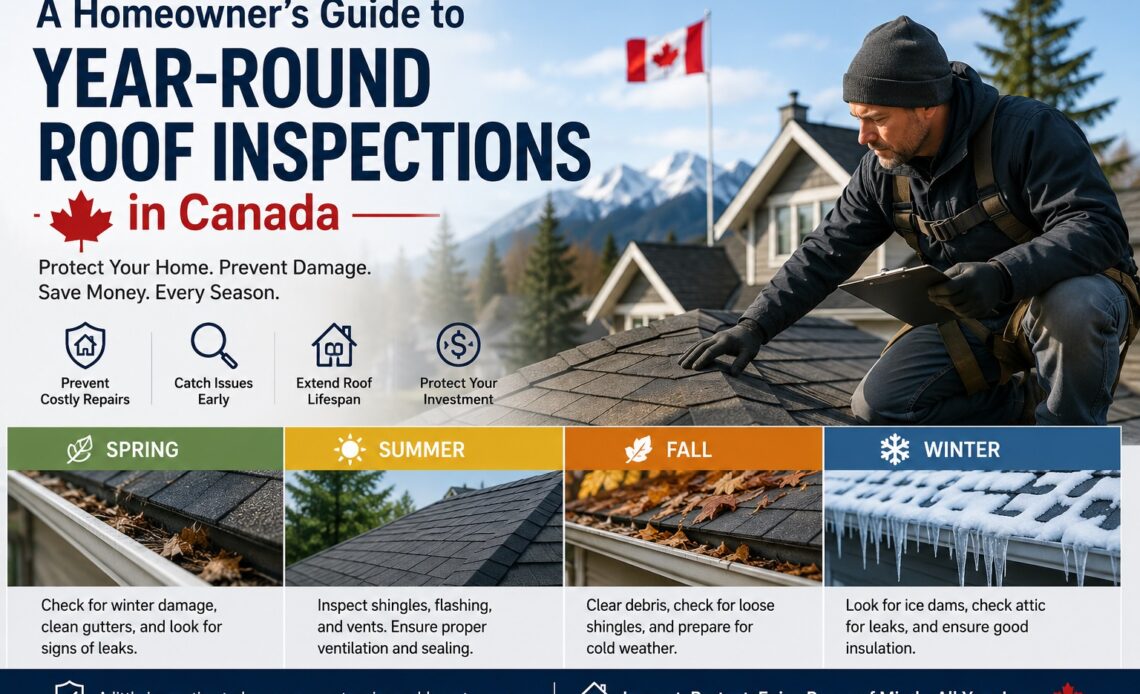
One of the highly effective ways for Canadian homeowners to keep their property secured from tough weather conditions is the season-by-season roof inspection routine. Their roofs face challenges the whole year from ice accumulations and heavy snowfalls in the coldest weather to seasonal storms and summer heat. One can identify minor issues through regular inspections before it requires major repairs, helps in extending roofing material’s lifespan and ensures your place becomes energy-efficient and safe the entire year. Make a year-round roof inspection checklist to get it done rightly and allow yourself to live with peace of mind afterwards.
Roof Inspection Checklist for Homes in Canada
Why do regular roof inspections matter?
Canada’s diverse climate requires a roof that must be the first line of defense against the bone-chilling weather over there. Roofing systems can be easily affected through strong winds, rainstorms, ice dams, snow loads and extreme temperature fluctuations. The homeowners can easily spot signs of avoiding expensive emergency repairs, maintain structural integrity and wear layers earlier. It’s definitely recommended to go for professional inspections and follow a roof maintenance checklist to monitor your roof’s condition in a better way.
Spring Roof Inspection Checklist
The damage caused by winter can’t be seen immediately and this is something we must be worried about. An ideal time for assessing freezing temperatures, ice and snow. The seasonal roof inspection is as valuable as the other required repairs and maintenance of your home.
Check Shingles:
You need to inject shingles for:
- Loose or lifted sections
- Missing shingles
- Curling edges
- Splitting or cracks
Something that creates vulnerabilities which allow water infiltration and weaken roofing materials is the freeze-thaw cycles. It’s one of the helpful roof maintenance tips.
Examine Flashing
Flashing around roof valleys, vents, skylights and chimneys need to be checked for:
- Missing sealant
- Separation from roofing materials
- Cracks
- Rust
One of the major roof leaking causes is damaged flashing.
Inspect Gutters and Downspouts
Here, you’re supposed to remove debris, twigs and leaves that made their places during winter. Go for:
- Signs of water flow
- Blockages
- Loose brackets
- Sagging gutters
Prevention of water damage to the foundation and roof is possible through proper drainage.
Check the Attic
Look for these inside the attic.
- Daylight signs entering through the roof
- Damp insulation
- Mold growth
- Water stains
Such problems indicate unaddressed roof leaks that require quick attention.
Summer Roof Inspection Checklist
Summer is the recommended season for detailed maintenance work and roof inspection.
Look for Storm Damage
Summer thunderstorms, hail and strong winds can have seriously negative effects on roofing materials. Go for:
- Damaged flashing
- Debris accumulation
- Impact marks from hail
- Missing shingles
Inspect Roof Ventilation
Something that’s essential during hot weather is proper attic ventilation. Let’s assess:
- Exhaust vents
- Soffit vents
- Ridge vents
Check for Moss and Algae
The moisture and humidity in summer welcomes algae and moss growth which leads to enough damage to the roof.
Assess Roof Surface Condition
Find the signs of:
- Sagging areas
- Uneven surfaces
- Granules loss on asphalt shingles
Fall Roof Inspection Checklist
One of the highly important maintenance tasks for residents in Canada is to prepare the roof before the arrival of winter. The right roof inspection guide can do the best job.
Clean Gutters Thoroughly
Never let the ice form during winter weather and ensure that water can flow freely.
Inspect Shingles and Flashing Again
Make sure you’re focusing on these points before snow arrives.
- Sealants are intact
- Flashing remains watertight
- Shingles are securely attached
Trim Overhanging Branches
Branches of the tree hanging right over the roof can:
- Deposit excessive debris
- Scratch roofing materials
- Break during snowstorms
Winter Inspection Checklist
Most winter inspections should be done from down on the ground because it’s just simple and safer. But still, homeowners need to keep an eye out for a couple of things. One is how much snow is piling up on the roof. The other is whether the weight of that snow is putting the house under stress.
Take a close look too at ice dams along the edges of the roof. This happens when heat is escaping up into the attic and melting the snow, only for it to freeze up again right near the eaves. Ice dams can cause the first layer of shingles to get pushed up by the water and leave you with a winter wonderland view from inside.
Benefits of Doing Regular Roof Inspections
Doing a roof inspection regularly is way more beneficial than expectations. It won’t cause any minor problems before they turn into major repair bills. It also helps to extend the life of your shingles and some other roofing materials. Your energy bill will also decrease and you’ll have a lesser chance of worrying about leaks and water damage.
In Canada, roof inspections are super important. They have got a pretty harsh climate to deal with. So as a Canadian homeowner, it makes a lot of sense to keep an eye on shingles, flashing, gutters & the a/c in the attic, and how they might all be related to ice dam formation. You can feel pretty good about the fact that your roof is better yet improved, no matter what the weather throws at it. Now, you can expect the roof lifespan extension without any doubt. Please contact a professional service provider for roof inspection, repair, and replacement at your earliest convenience.

Crafting words to inspire, engage and motivate. 10+ years of content writing, SEO, digital marketing and blogging experience. Ready to help your brand reach its potential!